GRI Standards
There are 3 results for "GRI Standards"
Articles related to GRI Standards
-
GRI 102 & 103 Update (2027): Climate & Energy Disclosure Changes Explained
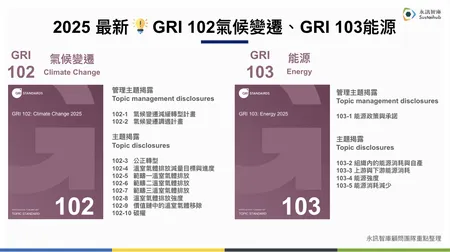
Sustainability reporting disclosure is moving from compliance to substantial governance management disclosure. With the release of the latest GRI Standards provisions in June 2025, including GRI 102 'Climate Change 2025' and GRI 103 'Energy 2025', companies must face more detailed disclosure requirements, from just transition, climate adaptation, to enhanced Scope 3 emission information transparency. This update is not just about changes in provisions, but a restructuring of organizational internal governance logic. This article will help you understand the background of GRI standards updates, key changes in GRI 102 and GRI 103, and where companies should start preparing to respond to the latest standards.
-
Updated Sustainability Reporting Rules: Filing Priorities and Timelines for Taiwan's Listed Companies (May 2026 Amendments)
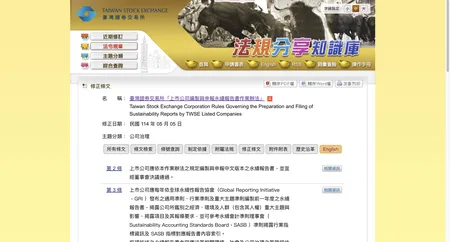
The Taiwan Stock Exchange announced the latest amendments to its Rules Governing the Preparation and Filing of Sustainability Reports by TWSE Listed Companies on May 18, 2026, following approval for recordation by the Financial Supervisory Commission on May 14, 2026. This article summarises the amendments and current filing requirements to help companies understand industry indicators, climate information, assurance and internal controls.
-
GRI 2021 Update: Materiality Assessment Explained with ESG Report Examples from 6 Companies
GRI released its Universal Standards 2021 on 5 October 2021, effective from 1 January 2023. The update replaces GRI 103: Management Approach with GRI 3: Material Topics 2021. GRI will also progressively publish 40 Sector Standards to guide companies on sustainability disclosures. This article explains the updated material topic assessment process step by step and presents examples from 6 leading companies to help you understand the latest materiality approach.
-
Choose a starting point for the task you are working on
Find peer reportsSustainability Report DatabaseBrowse Taiwanese corporate ESG reports for free (10,000+ reports).Find peer reports → Selection guideTaiwan ESG Reporting Software Selection GuideCompare the features and costs of ESG reporting systems before deciding which tool to use.Read the selection guide → SyberCoordinate disclosure with SyberChapter ownership, data collection, AI drafts, and review records.See the Syber reporting workflow →